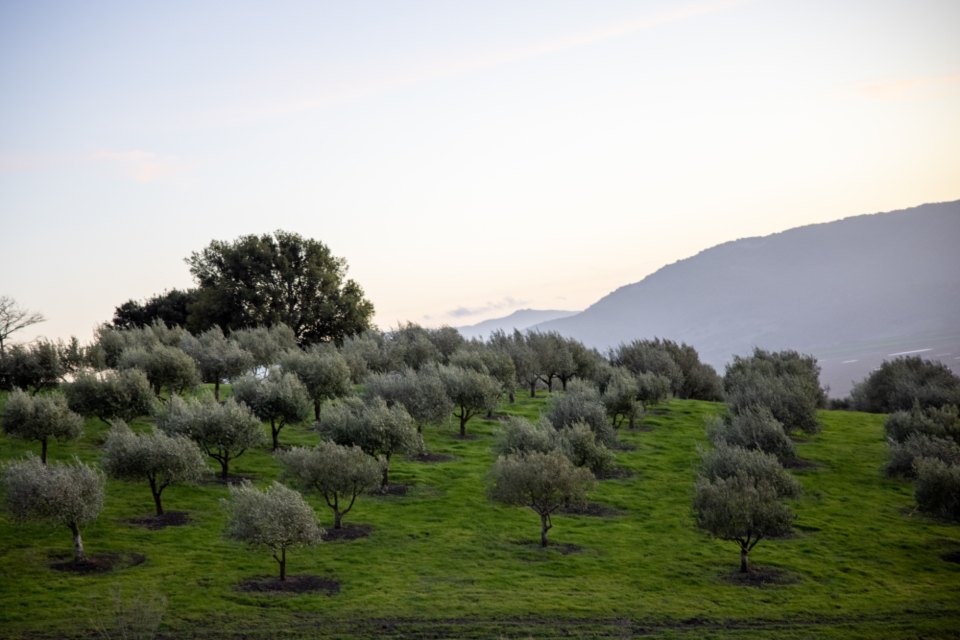
A Tunisian olive grove looks sparse to anyone used to European density. That spacing is not neglect; it is how you farm olives without irrigation in a country where water is the limiting factor.
Why the trees stand so far apart
In the arid south, traditional groves can be planted at very low densities — sometimes only a few dozen trees per hectare, against several hundred in an intensive European orchard. Each tree is given the root volume it needs to find water on its own. Yields per tree stay modest, the tree survives drought years, and the fruit it does set is concentrated.
Rain-fed by default
The large majority of the Tunisian grove is dry-farmed. Where irrigation exists it tends to be deficit irrigation — supplementing at the moments that matter rather than watering to maximum yield. Practically, that means production swings with rainfall, and a good rain year like 2025/26 shows up directly in the national figures.
Soil work instead of watering
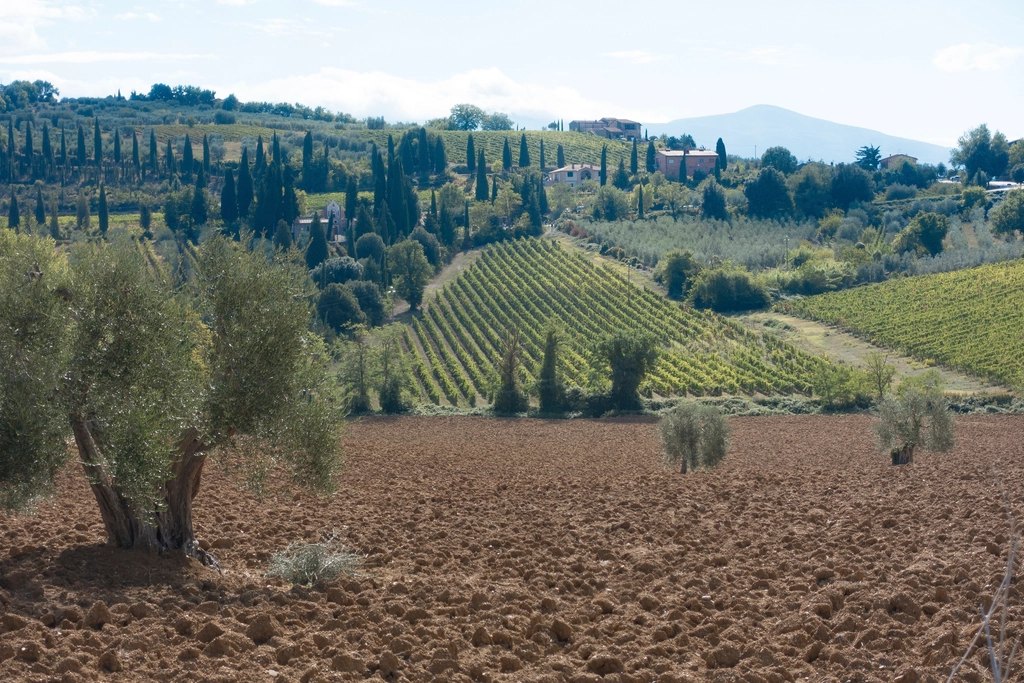
Tillage between the rows is the traditional way to break capillary rise and keep winter rain in the profile for the summer. It is effective, and it has a cost in soil structure — which is why cover cropping and reduced tillage are gaining ground among growers who can afford the transition.
Age
Olive trees are productive for many decades and can live for centuries. Older trees give less fruit per hectare but often more interesting oil. Both old traditional groves and newer plantings feed the Tunisian supply, and they are not interchangeable — which is one reason we record parcel origin per lot.
How we select
- Variety and zone matched to the profile we are building
- Grove condition and pruning history
- Realistic harvest logistics — distance and time to the mill
- Fruit sampled and assessed before commitment
Talk to our export desk
Want the parcel detail?
For lots currently available we can share region, variety mix and harvest window.