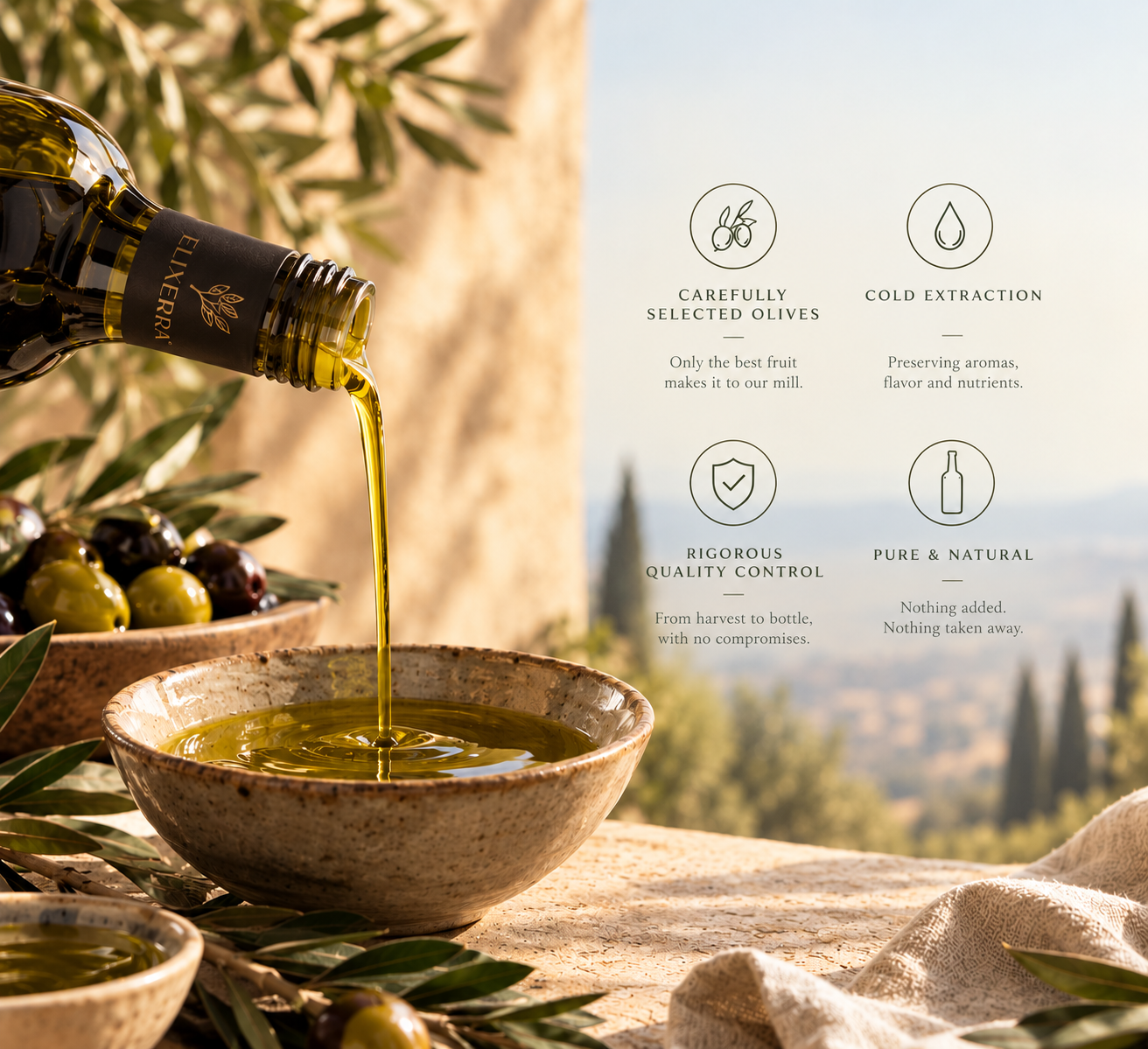
Extra virgin is a legal grade, not an adjective. It has to be earned in the grove, protected in the mill and proved in the laboratory — and we should be able to show you the evidence for the lot you are buying.
What extra virgin actually requires
To be sold as extra virgin, an olive oil must be produced by mechanical means only, show no sensory defect at all, and stay within defined chemical limits. The headline one is free acidity: no more than 0.8 g per 100 g, expressed as oleic acid. Peroxide value, K232 and K270 tell you how much the oil has already oxidised.
| Free acidity | max 0.8 % (we target well below) |
|---|---|
| Peroxide value | max 20 meq O₂/kg |
| K232 | max 2.50 |
| K270 | max 0.22 |
| Sensory | Median of defects = 0, fruity median > 0 |
Those are the legal ceilings. A young, well-made oil sits far below them, and the gap between “legal” and “good” is precisely where a supplier earns your trust.
How we get there
Five disciplines

Talk to our export desk
Ask for a certificate of analysis.
Tell us the reference and destination and we will send the current lot analysis, along with the certificates your customs and quality teams will ask for.